



 Back Home
Downtown
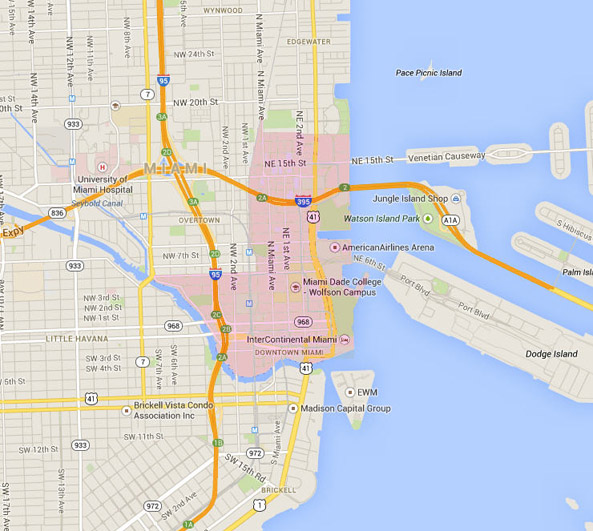
Downtown Miami, known as the Central Business District (CBD), is the historic and cultural core of the city. The area spans from NE 6th Street south to the Miami River and from Biscayne Bay west to NW 7th Avenue, and it was officially incorporated in 1896. As the oldest settled part of Miami, its development began in the 1890s with the arrival of Henry Flagler’s Florida East Coast Railway. Flagler, together with Julia Tuttle, William Brickell, and George Merrick, helped lay the foundation for the city by attracting investors and encouraging growth. Flagler Street, Downtown’s main east–west artery, was named in his honor, while the Julia Tuttle Causeway linking Downtown to Miami Beach recognizes the “Mother of Miami.”
Downtown is home to some of Miami’s oldest buildings, as well as major government offices, courthouses, cultural institutions, theaters, and corporate headquarters. Three designated historic districts—the Downtown Miami Historic District, Downtown Miami Commercial Historic District, and Lummus Park Historic District—showcase architectural styles ranging from Classical Revival to Art Deco and Moderne, reflecting the city’s growth from the early 1900s through the 1970s. Within the CBD, the Miami Jewelry District is renowned for its concentration of designer showrooms and local gem dealers, while surrounding neighborhoods such as Park West and Omni add distinct character. Park West, located just west of Museum Park, was long known for its nightlife venues but is undergoing significant redevelopment, while Omni, along Biscayne Boulevard, is home to luxury high-rises, hotels, and the Adrienne Arsht Center for the Performing Arts.
As Miami’s business center, Downtown hosts numerous consulates—including those of Canada, Argentina, the United Kingdom, France, Japan, Peru, Venezuela, Brazil, and Chile—primarily along Brickell Avenue and Biscayne Boulevard. It also houses multiple chambers of commerce, further strengthening Miami’s international business ties. Downtown is highly accessible, served by the Government Center Station on the Metrorail and 13 Metromover stations providing free connections throughout Downtown and Brickell.
Downtown Miami also offers a variety of parks and cultural attractions. Bayfront Park, a 32-acre public space located along Biscayne Bay, hosts concerts, festivals, and annual events. Museum Park, formerly Bicentennial Park, is now home to the Pérez Art Museum Miami (PAMM) and the Phillip and Patricia Frost Museum of Science. Shoppers and visitors can enjoy Bayside Marketplace, a bustling waterfront center filled with restaurants and entertainment, while the nearby Kaseya Center (formerly the American Airlines Arena) is home to the NBA’s Miami Heat and major concerts and performances.
Education and the arts also play a prominent role in Downtown. Schools serving the area include Downtown Miami Charter School, Ada Merritt K-8, Riverside Elementary, Bridgepoint Academy, and Booker T. Washington High School. The New World School of the Arts, a magnet program, is especially notable for its focus on visual and performing arts, offering programs in dance, theater, and music.
Today, Downtown Miami continues to live up to its nickname, “The Magic City.” Constantly evolving, the area is experiencing a surge of new development projects that are reshaping its skyline and bringing fresh energy to the community. With its unique blend of history, culture, nightlife, international presence, and diverse population, Downtown remains the heart of Miami and a vibrant destination for both residents and visitors alike.
If you have any interest living in Downtown, contact us and we will assist you with your real estate needs.